A technical explainer of the pre-treatment system of a hydraulic-lifting vacuum homogenizing emulsifying unit used for cosmetic creams, lotions and ointments — the structure and roles of the main emulsifying pot, water phase pot, oil phase pot and auxiliary structures, plus the full process flow.
Three-layer, GMP-ready construction
- All product-contact parts are 316L stainless steel with mirror polishing to meet GMP sanitary requirements.
- Every tank uses a three-layer jacket structure: inner tank, heating/cooling jacket and outer insulation layer.
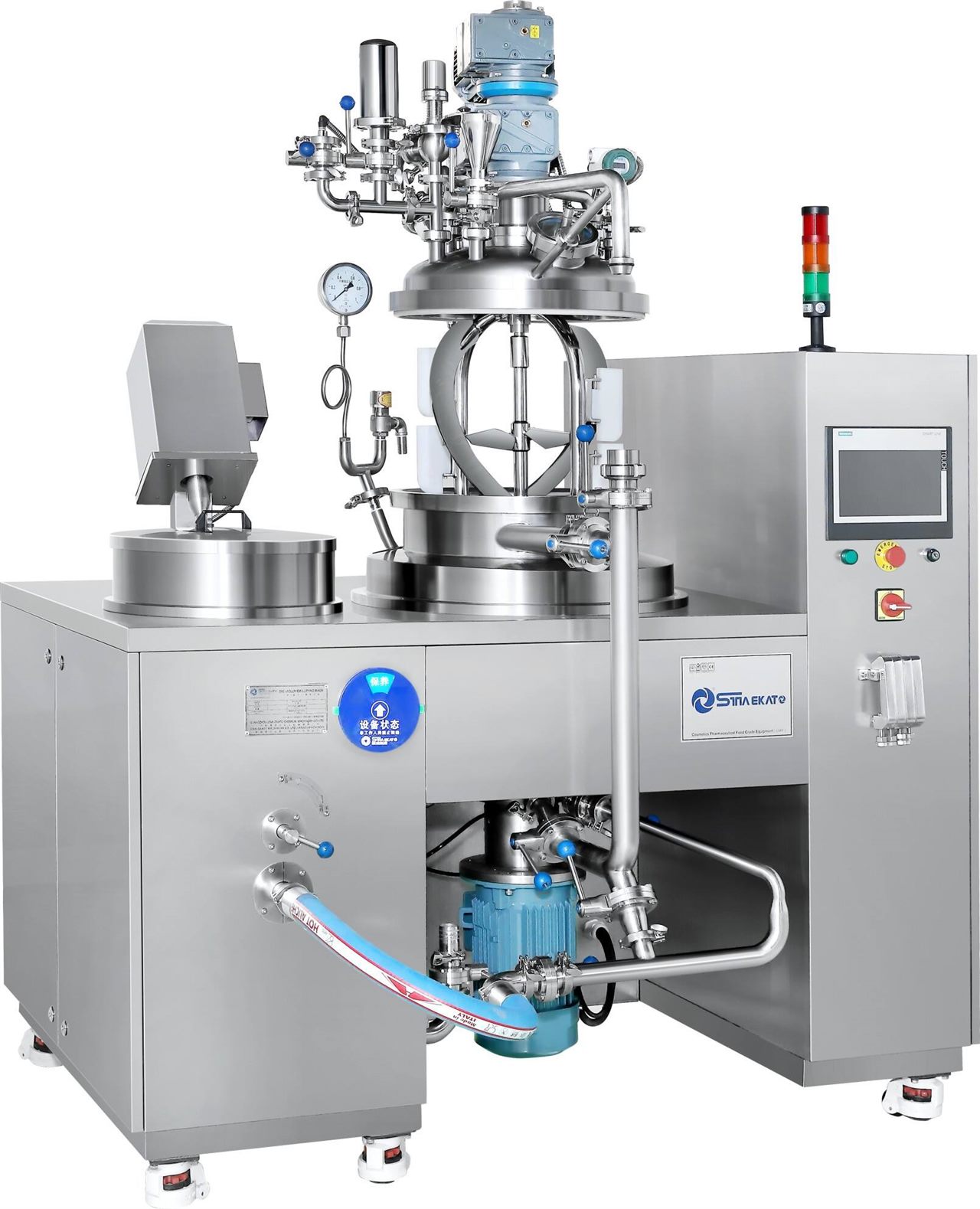
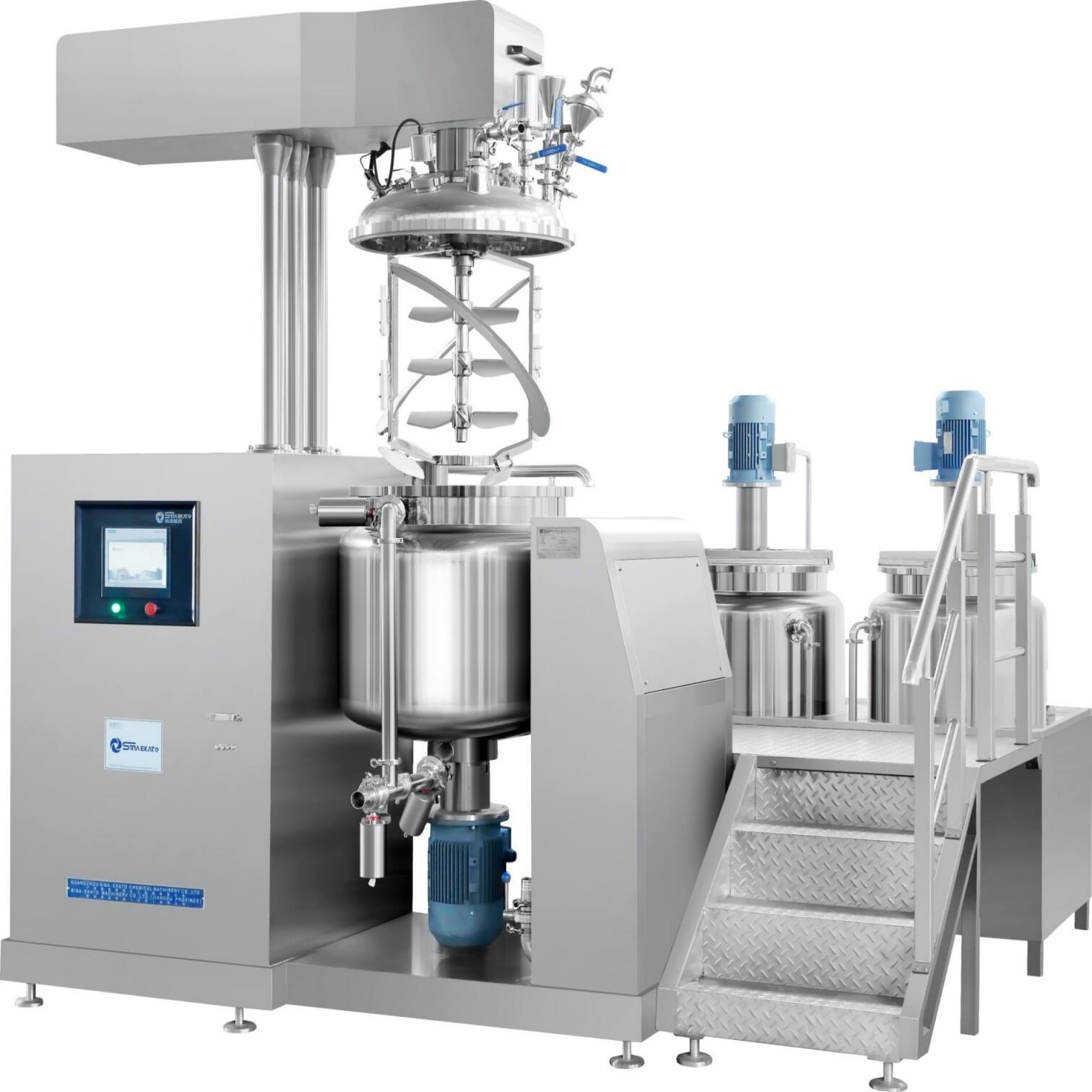
Main emulsifying pot
- Handles vacuum emulsification, homogenization and defoaming of the batch.
- The jacket accepts heat-transfer oil or steam for heating and cooling water for cooling.
- A bottom plunger valve discharges the finished product.
- The pot lid connects to hydraulic lifting columns and carries the vacuum port, feeding port, sight glass, breather port, temperature sensor and CIP cleaning connector.
Mixing system
- Low-speed central spiral/frame agitator combined with an anchor wall-scraping agitator.
- Bottom high-shear rotor–stator homogenizer for micron-level emulsification.
Water pot & oil pot
- The water pot pre-dissolves water-soluble materials such as deionized water, humectants and preservatives.
- The oil pot melts oils, waxes and emulsifiers.
- Both phases are sucked into the main pot by vacuum.
Auxiliary structures & process flow
- Material, vacuum and temperature-medium pipelines, an operator platform with stairs, and a PLC touch-screen control cabinet complete the unit.
- Process flow: water pre-mix → oil melting → vacuum suction into main pot → wall-scraping stirring + bottom homogenization under vacuum → cooling and defoaming → discharge via the bottom plunger valve.